The modern kitchen has become a cold monument to industrial perfection and stainless steel. Many homeowners feel a profound disconnect between their expensive, high-gloss cabinets and their internal need for peace. You likely feel the pressure to keep every surface gleaming and every edge sharp. This constant pursuit of the “new” creates a subtle, persistent background stress in your daily life.
What if your kitchen could actually celebrate the scratches on your wooden table or the patina on your copper pots? Wabi-sabi is the ancient Japanese philosophy that finds profound beauty in imperfection and the natural cycle of growth and decay. It is about choosing authenticity over artifice and presence over performance. By embracing this aesthetic, you transform your cooking area into a space for meditation.
Are you ready to stop fighting against time and start finding peace in the weathered grain of your home?
Transform Your Space with These Core Principles of Imperfection
- Prioritize raw, living materials like unsealed stone and reclaimed wood that evolve and change over time.
- Focus on asymmetrical layouts and organic shapes to mimic the beautiful unpredictability found in the natural world.
- Eliminate visual clutter to create pockets of negative space that allow the mind to rest and breathe.
- Choose a muted, earthy palette derived from clay, moss, and linen to ground your nervous system.
- Celebrate visible repairs and hand-crafted items that tell a unique story of human connection and utility.
The Philosophical Foundation of the Wabi-Sabi Culinary Sanctuary
Wabi-sabi is a way of seeing the world that rejects the disposable nature of modern culture. In a kitchen, this means prioritizing materials with a “soul” over synthetic laminates. This shift rebels against the fast-interior industry, favoring items with a narrative weight that anchors the room. By choosing objects that age, we treat our homes as sanctuaries for the passage of time rather than mere showrooms.
This philosophy suggests that attempting to freeze our homes in a state of “newness” distances us from the natural rhythm of life. Accepting that a wooden table will dent or a copper sink will darken fosters a mindset of acceptance. This psychological shift reduces the anxiety of domestic maintenance, allowing us to focus on the sensory joy of the present moment.
Finding Beauty in the Patina of Daily Life
A wabi-sabi kitchen ages gracefully. While modern design views a scratch as a tragedy, wabi-sabi sees it as a marker of a meal shared or a lesson learned. This acceptance of transience turns the home into a living entity. As copper darkens and wood develops a silken sheen, the kitchen mirrors the family’s history.
Patina is the physical manifestation of use. A heavy brass faucet that dulls where it is frequently touched records a history of interaction, providing a visual depth that polished surfaces lack. This “living finish” grounds us in physical reality, reconnecting our sense of sight with touch.
The Role of Kintsugi in Functional Design
Kintsugi, the art of repairing pottery with gold lacquer, translates to honoring an object’s history. If a tile cracks, filling it with contrasting grout celebrates the mend, reinforcing the idea that an object can be more beautiful for having been broken. It encourages a culture of repair, fostering a spiritual connection between the cook and their tools.
Beyond aesthetics, Kintsugi teaches resilience. Repairing a beloved item acknowledges its value beyond utility. This practice can extend to cabinetry or flooring, turning structural history into a centerpiece of design. The result is a home that feels honest, durable, and capable of absorbing life’s accidents without losing integrity.
The Geometry of Asymmetry: Embracing Fukinsei
Fukinsei refers to the beauty of asymmetry and irregularity. Western kitchens, often designed with oppressive mathematical precision, lack the organic tension found in the natural world. Introducing staggered shelf heights or an off-center island breaks this mechanical feel, creating a space that is both engaging and comforting.
In a wabi-sabi kitchen, balance is achieved through the weight of textures and light rather than symmetry. An off-center window might be balanced by a heavy stone countertop, inviting discovery as perspectives change. This dynamic arrangement prevents the space from feeling static, mirroring the complexity of a natural landscape.
Designing Non-Linear Ergonomics
Ergonomics here focuses on natural flow rather than industrial efficiency. Instead of a rigid “work triangle,” consider a fluid workspace with curved edges and varied counter heights. This tactile minimalism prioritizes the human form, turning cooking from an assembly line task into a craft.
Non-linear design also makes room for the “pause.” Small ledges for a glass of wine or a cookbook acknowledge that cooking is a social, reflective act. These irregular spaces break the efficiency-first mindset, encouraging a slower pace that benefits both the food and the cook’s mental state.
Designing with Materials That Breathe and Age Naturally
The most critical step is choosing surfaces that respond to the touch of your hand and environmental changes. Materials like zinc, clay, and timber react to heat and humidity, creating a sensory dialogue between the inhabitant and the architecture.
Why Reclaimed Wood is the Heart of the Home
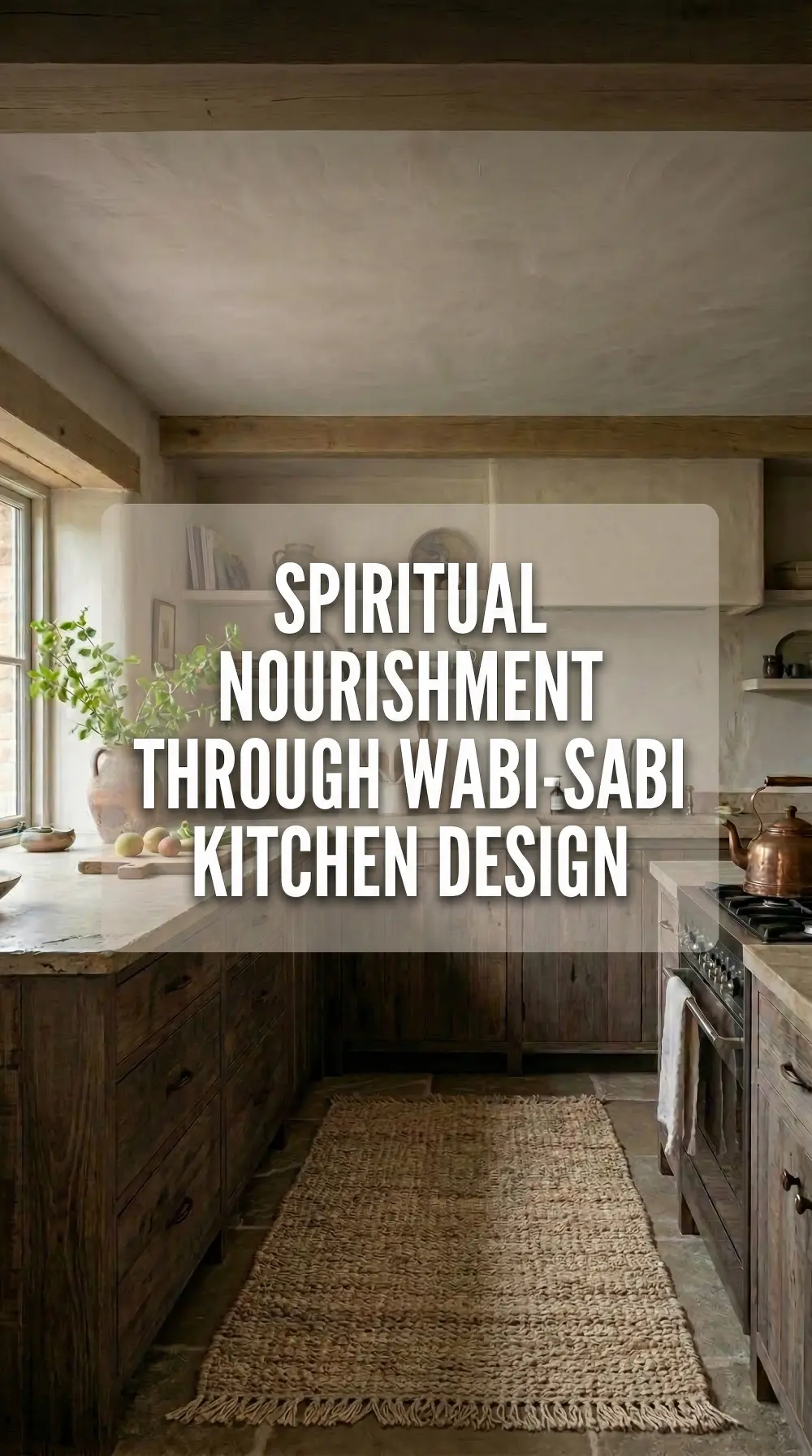
Reclaimed timber brings the weight of history into the home. Using salvaged wood for shelving or islands provides immediate grounding. Its rough-hewn texture invites you to slow down and feel a connection to a past era of craftsmanship. Every knot and nail hole tells a story that new lumber cannot replicate.
Reclaimed wood is often more stable, having already survived decades of seasonal changes. Choosing these materials is a sustainable practice that aligns with wabi-sabi values. The material’s “imperfections”—saw marks or sun-faded tones—provide the kitchen with its unique warmth and soul.
Selecting Natural Stone for Sensory Feedback
Soapstone, slate, and honed marble offer a soft and warm tactile experience. These stones pick up stains over time, creating a living finish that records your life in the kitchen. Eventually, these marks soften into a rich texture that makes the stone feel like part of the natural landscape.
These materials provide acoustic and thermal feedback that synthetic surfaces lack. As the stone chips or wears at the edges, it looks “authentic” rather than broken, shaped by the unique patterns of your daily life.
Artisanal Joinery: The Soul of the Cabinetry
Exposed artisanal joinery, such as visible dovetail or mortise and tenon joints, serves as a design statement celebrating the human element. These details ensure furniture lasts for generations and foster a deeper respect for the object. This transparency of construction reveals the honesty of the maker, a core tenet of wabi-sabi.
Hand-cut joints possess subtle variations that add human warmth. Unlike mass-produced furniture held together by glue and plastic, artisanal joinery relies on the mechanical strength of the wood itself, making the kitchen feel like a collection of bespoke furniture.
The Beauty of Hand-Applied Plaster Walls
Limewash or tadelakt plaster adds a suede-like texture that interacts with light to create depth. These hand-applied finishes make walls feel part of the earth, providing a soft embrace that changes character throughout the day. The trowel marks create a rhythmic texture that standard drywall lacks.
Limewash is breathable and naturally inhibits mold. Its matte appearance absorbs light, helping to create a quiet atmosphere. As it ages, fine hairline cracks may develop—beautiful evolutions of the material as it settles into the structure of the house.
| Material Type | Wabi-Sabi Characteristic | Sensory Benefit |
| Unsealed Brass | Develops a dark, rich patina | Feels substantial and historic |
| Terracotta Tile | Variations in bake and color | Warms the feet and the eyes |
| Linen Textiles | Naturally wrinkled and soft | Softens the acoustic environment |
| Raw Concrete | Pitted, porous, and matte | Provides industrial grounding |
Biophilic Integration: Connecting to the External Ecosystem
A wabi-sabi kitchen should connect to the outdoors. Biophilic design suggests our well-being is tied to nature; large windows or indoor herb gardens bridge this gap. This connection reduces stress and encourages a mindful approach to food preparation, acknowledging the kitchen as part of a living ecosystem.
Integrating natural cycles means allowing weather to influence the room’s mood. A rainy day might darken stone counters, while a sunny afternoon highlights the air. Embracing these shifts reminds us that our homes are permeable spaces existing in harmony with the environment.
The Seasonal Kitchen Altar
A small corner for a seasonal display—like harvested stones or blooming branches—serves as a visual meditation. This “altar” grounds the home in the current moment and the cycle of the seasons. It can be as simple as a single leaf or a bowl of summer peaches, serving as a focal point for gratitude.
This ritual of observation forces you to notice subtle changes in the landscape. It brings wonder into mundane tasks, turning a workspace into a place of contemplation where the bounty of the earth and the passage of time are observed with reverence.
Mastering the Color Palette of the Natural World
A wabi-sabi palette is quiet and restrained, avoiding stark whites or neon to create a seamless transition to the landscape outside. This serenity allows the colors of the food to take center stage, letting your mind decompress as soon as you enter the room.
Embracing the “Dull” Tones of Clay and Earth
Colors like charcoal, beige, ochre, and sage green do not demand attention. Instead, they provide a neutral backdrop that highlights the vibrant colors of fresh vegetables. These “dull” tones possess hidden complexity that reveals itself under different lighting, avoiding artificial saturation.
A nature-derived palette feels timeless and expansive. By surrounding yourself with the colors of the earth, you tap into a primal sense of safety, turning the kitchen into a nurturing space for the family.
The Lighting Layer: Candlelight Temperatures
Prioritize warm-toned LEDs (2700K or lower) that mimic firelight. Use filtered diffusion through paper or woven shades to create dappled light, which is more relaxing and casts soft shadows. Lighting should be layered, with small lamps in corners rather than a single harsh overhead source.
Shadows create mystery and intimacy. Leaving some areas in soft darkness allows the room to feel larger and more complex, encouraging a slower way of moving. It mimics the natural end of the day, signaling the brain to focus on rest and nourishment.
Intentional Layouts and the Power of Negative Space
The layout should feel evolved rather than engineered, focusing on the flow of energy. A well-designed space accommodates the “mess” of life while maintaining order, leaving breathing room between functional zones to ensure the kitchen feels relaxed rather than cramped.
Negative space, or “Ma,” provides essential mental clarity. It is the silence between the notes—a stretch of empty counter where the eye can rest amidst busy activity. Without negative space, even a beautiful room becomes overwhelming.
The Freedom of Open Shelving
Open shelving forces you to curate your belongings, keeping only what is beautiful or useful. This creates a visual rhythm that encourages mindful use and transforms everyday utility into lived-in art. It also makes setting the table more efficient by removing the barrier of cabinet doors.
Open shelving reveals the architecture and allows the kitchen to breathe. While it requires more organization, the result is a transparent connection to your kitchenware, leading to a more intentional relationship with the objects you own.
Incorporating Found Objects as Functional Art
Look for objects with utility, like a river stone doorstop or a gnarled branch pot rack. These elements bring the wildness of nature into the home, breaking the rigidity of manufactured lines. Using found objects reminds us that beauty is often free and available to those who look.
These objects provide an organic contrast to factory-made elements. A hand-woven basket or a driftwood handle adds unique texture that cannot be reproduced. This juxtaposition is central to wabi-sabi, rooting the home in its local environment.
Practical Steps to “Wabi-Sabi” Your Existing Kitchen
You can start by stripping away the synthetic layers—peeling back plastic and veneer to reveal honest materials. This “de-layering” might involve removing contact paper or replacing plastic bins with wooden crates to uncover the room’s essential character.
Removing the High-Gloss Finish
Sanding painted cabinets to a matte finish or using milk paint that wears naturally creates a soft, casual comfort. Matte surfaces are also better at hiding fingerprints and scratches, making the kitchen easier to live in long-term.
Reducing shine eliminates “visual noise.” Softening the finish allows the true color of the cabinets to emerge, turning a “loud” kitchen into a “quiet” one that provides a soothing backdrop for cooking.
The Ritual of Slow Organization
Transition dry goods into simple, unlabeled vessels like glass jars or ceramic crocks to remove visual noise. This decanting becomes a meditative ritual that deepens your connection to your ingredients. It encourages buying in bulk and reducing waste by making your inventory transparent.
Slow organization turns a chore into a ritual of care. Ensuring that even hidden parts of your home align with values of simplicity and presence mirrors the overall transparency of the wabi-sabi kitchen.
| Feature | Modern Perfectionist Style | Wabi-Sabi Organic Style |
| Countertops | Seamless Quartz | Pitted Limestone or Wood |
| Symmetry | Exact Mirror Images | Balanced Asymmetry |
| Hardware | Hidden or Chrome | Exposed Brass or Iron |
| Cabinetry | Glossy Flat Panels | Shaker or Reclaimed Planks |
Creating a Sensory Experience Through Sound and Scent
A kitchen is a multi-sensory environment. The way a room sounds and smells contributes as much to its atmosphere as its appearance. Balancing all five senses creates a truly immersive and peaceful home.
The Acoustic Softness of Natural Fibers
Using jute rugs or linen curtains absorbs echoes from hard surfaces, turning background noise into a rhythmic hum. A quiet kitchen allows for better conversation and focus, acting as a sanctuary from the noisy outside world.
The sounds of your tools also matter. The “tock” of a wooden spoon against ceramic is more pleasant than metallic clanging. Choosing tools that make pleasing sounds enhances the sensory joy of the space.
Using Natural Scents Over Synthetic Sprays
Clean with vinegar and essential oils like cedarwood or rosemary rather than harsh chemicals. The scent of beeswax polish signals that the environment is safe and grounded, facilitating relaxation. These natural scents blend with cooking aromas to create a rich, organic olfactory landscape.
Scent is a powerful link to emotion. Consistently using natural scents “anchors” a feeling of peace to the kitchen. When the air itself feels nourishing, your nervous system receives a constant signal to relax.
The Spiritual Nourishment of Mindful Cooking
Kitchen design should support the practice of mindfulness. An authentic environment transforms cooking from a task to be rushed into a sacred duty—a time to slow down and engage with the elements of life.
Turning Meal Prep into a Meditation
In wabi-sabi, the process is as important as the result. Using a heavy mortar and pestle or a sharp knife on a wooden board becomes a grounding ritual. Repetitive motions like chopping and stirring serve as active meditation, clearing the mind of daily worries.
Focusing on the process also improves the food. Heightened awareness helps you notice subtle changes—the smell of garlic or the resistance of dough. This transforms domestic labor into a spiritual practice.
Celebrating the Seasons on the Table
Decorating with seasonal branches or grasses reminds us that nothing lasts and nothing is perfect. This is the core of finding peace in the kitchen. Changing your table decor celebrates the flux of the world and encourages eating in sync with the earth.
Eating seasonally honors the specific bounty of each month. Gratitude for what is available now—whether a crisp winter apple or a sweet summer peach—is the ultimate antidote to the modern craving for more.
Honoring the Soul of Your Home Through Imperfection
Wabi-sabi gives you permission to be human. It is an invitation to stop performing and live in a space that reflects your values. Your kitchen should be a warm, breathing extension of your spirit where you can enjoy life’s small beauties—the half-empty wine glass or the crumbs on the counter.
A wabi-sabi home is compassionate, accepting your flaws and histories just as it accepts its own worn surfaces. By honoring the soul of your home through imperfection, you create a resilient space that only gets better and more loved as the years pass.
Solving Common Challenges in Wabi-Sabi Kitchen Planning
How Do I Keep a Wabi-Sabi Kitchen Clean Without Ruining the Patina?
You should use mild, natural soaps and soft cloths to clean your surfaces regularly. Avoiding harsh chemical strippers allows the natural oils and history of the materials to build up over time. A clean wabi-sabi kitchen is about hygiene and health, not about achieving a sterile, laboratory-like appearance. You must embrace the idea that cleanliness and age can exist in the same beautiful space.
Will Using Reclaimed Materials Make My Kitchen Look Cluttered or Dirty?
Visual clarity comes from intentional placement and the removal of unnecessary plastic items. You can use weathered wood and stone alongside clean, minimal lines to ensure the space feels modern and organized. Focus on large-scale textures rather than small, fussy details to maintain a sense of calm and order.
Is Wabi-Sabi Design Expensive to Implement Compared to Standard Remodels?
This philosophy often saves money because it encourages you to keep existing structures and use second-hand items. You are investing in quality over quantity, choosing one handmade ceramic pitcher instead of a dozen mass-produced glasses. The primary investment is your time and attention to detail rather than a high retail price tag.
Can I Blend Wabi-Sabi with Modern Appliances and Technology?
Modern technology can be integrated thoughtfully by choosing matte finishes or “panel-ready” appliances that blend into the cabinetry. You should prioritize functional simplicity and hide complex gadgets inside cupboards when they are not in use. The contrast between a state-of-the-art stove and a rustic wooden island can actually highlight the beauty of both.
What Should I Do if My Partner Prefers a Minimalist or Modern Look?
Wabi-sabi is actually a form of minimalism that focuses on the essence of objects. You can find common ground by keeping the layout clean and geometric while introducing warmth through natural textures. Suggest using a neutral color palette that satisfies their love for simplicity while providing the depth you crave in a lived-in home.